In the whirlwind of modern life, emotional turbulence has become a familiar companion to many. From the sharp sting of anxiety to the heavy weight of frustration, these intense feelings can feel overwhelming, leaving individuals searching for quick, accessible methods to regain their equilibrium. Amidst a sea of complex psychological techniques and pharmaceutical interventions, a strikingly simple and ancient practice has resurfaced in wellness conversations: the application of cold water to the wrists. This method, often whispered about in online forums and recommended by therapists, is gaining traction not as a cure-all, but as a potent tool for immediate emotional regulation.
The science behind this practice, while not yet exhaustively documented, taps into fundamental principles of human physiology. The human body is a complex web of interconnected systems, and the nervous system is the primary conductor of our emotional and physical responses. When we experience strong emotions like panic, anger, or acute stress, our sympathetic nervous system—often termed the "fight or flight" system—kicks into high gear. This triggers a cascade of physiological changes: heart rate accelerates, breathing becomes shallow, and blood flow is directed away from the extremities toward the core muscles. It is a primal, automatic reaction designed for survival, but in the context of a stressful work meeting or a social conflict, it is anything but helpful.
This is where the simple act of cool water on the wrists enters the picture. The wrists are pulse points, areas where arteries run close to the surface of the skin. These regions are highly sensitive to temperature changes. Applying a cold stimulus, such as splashing water or holding a chilled bottle against the inside of the wrist, sends a powerful signal to the brain. The sudden cold acts as a "distracting" sensory input, a novel and pressing sensation that demands the brain's attention. This process is known as "grounding" or sensory diversion. By focusing on the sharp, concrete feeling of cold, the brain is momentarily pulled away from the cycle of anxious or angry thoughts, creating a crucial pause in the emotional escalation.
Furthermore, the cold temperature can directly influence physiological arousal. The body's reaction to a cold stimulus is to try to conserve heat, which can slightly lower the heart rate and encourage deeper, more controlled breathing. This begins to counteract the very symptoms of a stress response. It’s a way of gently persuading the body that the emergency is over, coaxing the nervous system back toward a state of calm. It is not magic; it is biohacking in its most elemental form, using the body's own reflexes to guide it toward balance. The effect is often rapid, providing a window of clarity that allows for more rational thought and deliberate action instead of reactive behavior.
Integrating this technique into daily life requires no special equipment or training, which is perhaps its greatest strength. The next time you feel a wave of irritation during a difficult conversation, or the familiar clutch of anxiety before a presentation, excuse yourself for a moment. Step into a restroom, turn on the tap, and let cool water run over your wrists and the palms of your hands. Focus intently on the sensation—the temperature, the movement of the water, the sound it makes. Hold a cold can of soda or a chilled glass of water and press it against your pulse points. The key is mindfulness; the act must be intentional to be effective. It is a deliberate interruption of your emotional state, a conscious choice to engage with a physical sensation.
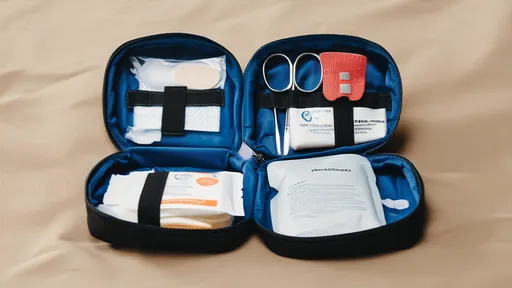
It is critical to understand what this practice is not. It is not a substitute for professional mental health care, therapy, or medication for those with diagnosed anxiety disorders or other conditions. It will not solve deep-seated emotional issues or erase trauma. Rather, it should be viewed as a first-aid kit for the emotions—a readily available, immediate response tool for managing acute moments of distress. It is one technique among many in a broader toolkit for emotional wellness, which might also include meditation, exercise, deep breathing, and seeking social support. Its power lies in its simplicity and immediacy, offering a way to hit the "reset" button in a moment of high tension.
As with any wellness practice, individual experiences will vary. Some may find profound relief in a few seconds of cold stimulation, while others may find it only mildly distracting. The temperature need not be freezing; cool water is often sufficient to trigger the response without being uncomfortable. The goal is stimulation, not punishment. Experiment to find what works best for you, paying attention to how your body and mind respond in different situations. The most important outcome is that it provides a moment of pause, a space between feeling and reaction where choice resides.
In a world that often feels increasingly chaotic and demanding, having accessible, non-invasive strategies to manage our emotional health is not just a luxury—it is a necessity. The practice of cooling the wrists is a testament to the fact that sometimes, the most effective solutions are also the simplest. It harks back to a time of intuitive remedies, yet its mechanisms are supported by our understanding of the nervous system. It empowers the individual, offering a sense of agency over one's internal state. So the next time emotions threaten to overwhelm, remember this ancient, straightforward trick. A splash of cool water might be all it takes to navigate the storm and find your way back to calm waters.
By /Aug 26, 2025
By /Aug 26, 2025
By /Aug 26, 2025
By /Aug 26, 2025
By /Aug 26, 2025

By /Aug 26, 2025
By /Aug 26, 2025

By /Aug 26, 2025

By /Aug 26, 2025
By /Aug 26, 2025

By /Aug 26, 2025

By /Aug 26, 2025

By /Aug 26, 2025

By /Aug 26, 2025

By /Aug 26, 2025

By /Aug 26, 2025

By /Aug 26, 2025

By /Aug 26, 2025

By /Aug 26, 2025

By /Aug 26, 2025