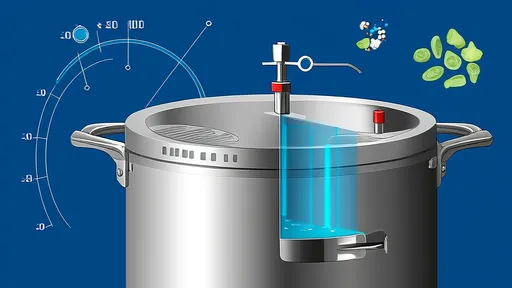
In the world of precision cooking, few techniques have garnered as much attention from both professional chefs and home enthusiasts as sous vide. At its core, this method relies on immersing vacuum-sealed food in a water bath maintained at a meticulously controlled temperature for an extended period. While the concept appears straightforward, the true magic—and the subject of intense culinary science—lies in the extreme accuracy of that temperature control. The difference between a good result and an extraordinary one can often be measured in mere tenths of a degree. This deep dive explores the profound implications of maintaining a water bath with a variance of no more than ±0.1°C, specifically on the most fundamental component of our food: proteins.
The behavior of proteins under heat is a story of transformation. From the moment heat is applied, these complex molecules begin to denature—a process where they unwind from their natural coiled structures. As they unravel, they then bond with each other, a process known as coagulation, which ultimately gives cooked food its firm texture and opaque appearance. This is not a single event but a gradual progression. The critical insight for modern cooking is that this transformation is not solely dependent on the final temperature reached but is a function of both time and temperature. A protein held at 58°C will behave very differently than one held at 58.5°C over the same period. This is why precision is not a luxury; it is the very foundation of predictable and superior outcomes.
When we narrow our focus to the ±0.1°C benchmark, we enter the realm of ultra-precision. This level of control was once the domain of high-end scientific laboratories but is now achievable with advanced immersion circulators. The effect of such a tight thermal window is most dramatically observed in the doneness and texture of animal proteins. Consider a premium cut of beef, like a filet mignon, intended to be served medium-rare with a perfect, edge-to-edge pink interior. The target core temperature for this result is typically around 55°C. In a bath fluctuating by ±1.0°C, the protein would be subjected to temperatures between 54°C and 56°C. This range crosses a critical threshold, potentially causing the outer portions of the meat to begin tightening and expelling moisture (a process that starts in earnest around 56°C), while the core might remain slightly under. The result is inconsistency—a gradient of doneness and a less juicy final product.
Now, imagine that same steak cooked in a bath held at 55.0°C with a variance of only ±0.1°C. The entire piece of meat, from its surface to its very center, is subjected to a near-identical thermal environment between 54.9°C and 55.1°C. This stability allows the proteins throughout the steak to denature and coagulate at an almost perfectly uniform rate. The outcome is a piece of meat that is consistently medium-rare across its entire cross-section, with its muscle fibers retaining far more of their inherent moisture and tenderness. The margin for error is virtually eliminated, guaranteeing the chef's intended result every single time. This precision transforms cooking from an art of estimation into a science of replication.
The impact extends far beyond simple doneness. The texture of proteins is a direct consequence of how tightly they coagulate. At higher temperatures, proteins contract more forcefully, squeezing out water and becoming tough. The ±0.1°C control allows a chef to "dial in" a texture that is simply unattainable with traditional methods. For instance, chicken breast can be cooked to a safe pasteurization temperature of 65°C, but holding it precisely at that temperature for a sufficient time results in a succulent, almost creamy texture that stands in stark contrast to the dry, stringy breast produced by oven roasting, where internal temperatures can easily overshoot. Similarly, delicate fish like salmon or cod can be cooked to a buttery, opaque firmness without any of the chalkiness that occurs when even slightly overheated.
Perhaps the most significant effect of this thermal precision is on moisture retention. Juiciness in meat is a function of both water and melted fat held within the protein structure. Aggressive heat causes rapid and violent protein contraction, acting like a squeeze that forces these liquids out onto the plate. Precision low-temperature cooking avoids this trauma. By never exceeding the intended temperature, the proteins contract gently and minimally. This gentle process preserves the structural integrity of the meat, allowing it to hold onto its natural juices. The ±0.1°C stability ensures that not a single fraction of a degree of excess heat disrupts this delicate balance, maximizing the yield of moisture and flavor in every bite.
The science behind this is rooted in enzyme activity as well. Many meats contain natural enzymes, such as cathepsins and calpains, that are responsible for breaking down tough connective tissue over time. These enzymes have their own optimal temperature ranges. A stable water bath allows a cook to hold the protein at the perfect temperature to maximize the activity of these tenderizing enzymes without simultaneously triggering the toughening effects of excessive heat. A fluctuation outside this narrow window could deactivate these enzymes prematurely or accelerate moisture loss, undermining the tenderizing process. This level of control is what enables the transformation of tough cuts like chuck roast or short ribs into phenomenally tender dishes through extended cooking times without them becoming mushy or dry.
In conclusion, the pursuit of a ±0.1°C water bath variance is far more than a technical specification on an immersion circulator's datasheet. It represents the fundamental difference between cooking protein and mastering it. This incredible precision provides unparalleled command over the three most critical attributes of cooked protein: doneness, texture, and juiciness. It elevates the process from mere heating to one of careful biochemical manipulation, enabling outcomes that consistently meet the exact vision of the cook. For anyone passionate about the science of superb food, understanding and leveraging this precise thermal control is the key to unlocking a new world of culinary possibility and consistently creating exceptional dishes that were once only possible in the world's best kitchens.
By /Aug 29, 2025
By /Aug 29, 2025

By /Aug 29, 2025

By /Aug 29, 2025
By /Aug 29, 2025
By /Aug 29, 2025

By /Aug 29, 2025

By /Aug 29, 2025

By /Aug 29, 2025
By /Aug 29, 2025
By /Aug 29, 2025
By /Aug 29, 2025
By /Aug 29, 2025
By /Aug 29, 2025
By /Aug 29, 2025
By /Aug 29, 2025
By /Aug 29, 2025
By /Aug 29, 2025
By /Aug 29, 2025
By /Aug 29, 2025