In the quiet revolution against waste, two humble heroes have emerged from the soil itself—compost bins and worm towers. These aren’t just trendy sustainability buzzwords; they are practical, powerful tools that transform what we often dismiss as "trash" into black gold for our gardens and communities. Across backyards, balconies, and even urban farms, people are discovering that managing organic waste doesn’t require complex technology or expensive systems. It requires little more than intention, basic materials, and a partnership with nature’s most efficient decomposers.
When we talk about zero waste, kitchen scraps often stand as the biggest challenge for households. Food waste is heavy, wet, and prone to smelling when trapped in plastic bags destined for landfills. In these oxygen-starved environments, organic matter breaks down anaerobically, releasing methane—a greenhouse gas far more potent than carbon dioxide. But what if we could change the narrative? What if our apple cores, vegetable peels, and coffee grounds could instead enrich the earth, support healthy plant growth, and complete a natural cycle right where we live?
This is where composting comes in. At its heart, composting is the controlled decomposition of organic material. By creating an environment rich in oxygen, moisture, and a balanced mix of carbon and nitrogen, we encourage aerobic microbes to break down waste into nutrient-rich humus. This process doesn’t just avoid methane production; it creates a valuable soil amendment that improves soil structure, water retention, and fertility. You don’t need a science degree to get started—just a willingness to learn and observe.
Let’s begin with traditional compost bins. These systems can be as simple as a pile in the corner of your yard or as structured as a rotating tumbler. The key is layering your materials. Greens—such as fruit and vegetable scraps, fresh grass clippings, and coffee grounds—provide nitrogen. Browns—like dried leaves, straw, cardboard, and paper—supply carbon. A healthy compost pile should have roughly a 3:1 ratio of browns to greens. This balance prevents foul odors and accelerates decomposition.
Moisture and aeration are critical. Your pile should feel like a wrung-out sponge—damp but not soggy. Turning the compost every week or two introduces oxygen, which fuels the microbial activity that generates heat. A well-maintained pile can reach temperatures high enough to kill weed seeds and pathogens, resulting in finished compost in as little as two to three months. If you’re short on space, consider a compact enclosed bin or even a community composting program. Many cities now offer resources or collection services to help residents divert food waste from landfills.
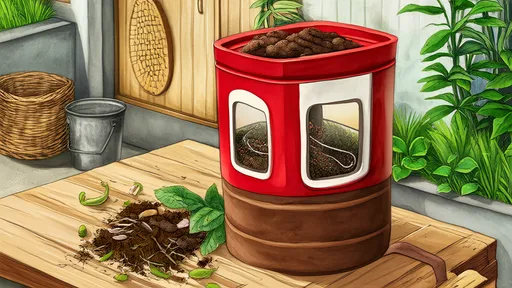
But what if you want something even simpler, something that works passively and fits into small spaces? Enter the worm tower, also known as worm composting or vermicomposting. This method uses special species of earthworms—most commonly red wigglers—to consume organic waste and produce exceptionally rich castings. Worm towers can be kept indoors or out, making them ideal for apartment dwellers or those with limited outdoor space.
Building a worm tower is straightforward. You can use a stacked bin system or repurpose a large container with drainage holes. Start with a bedding material such as shredded newspaper or coconut coir, moistened to that same damp-sponge consistency. Add your worms, then begin feeding them small amounts of kitchen scraps. Avoid oily foods, meat, dairy, and highly acidic items like citrus—stick to fruit and vegetable peels, grains, and coffee grounds.
The worms will slowly eat through the waste, converting it into vermicompost—a dark, crumbly, odorless material that’s often called "gardener’s gold." Their castings are teeming with beneficial microbes and nutrients that are readily available to plants. One of the beauties of a worm tower is how low-maintenance it is. Once established, it requires little more than occasional feeding and harvesting of the finished compost every few months.
Both composting and worm towers offer more than just waste reduction. They reconnect us to the cycles of nature, even in urban settings. There’s a profound satisfaction in seeing your food scraps turn into something that nurtures new growth. For families, it’s a hands-on way to teach children about sustainability and biology. For gardeners, it’s a free source of fertilizer that outperforms many store-bought alternatives. For communities, it’s a step toward resilience, reducing the burden on municipal waste systems and cutting greenhouse gas emissions.
Of course, challenges can arise. Compost piles might attract pests if not properly managed, or they may become too wet or too dry. Worm bins can suffer if overfed or if the environment becomes too acidic. But these issues are easily remedied with a little knowledge and attention. Online forums, local gardening groups, and extension services are rich sources of advice and support. The most important thing is to start—to take that first step, however small.
Imagine a future where every household, school, and business manages its organic waste responsibly. Imagine neighborhoods where soil health is prioritized, where gardens flourish without chemical inputs, and where waste is seen not as an endpoint but as a resource. This isn’t a distant utopia; it’s a reality within reach, one compost bin and worm tower at a time. The tools are simple, the benefits profound, and the time to begin is now.

By /Aug 29, 2025
By /Aug 29, 2025

By /Aug 29, 2025

By /Aug 29, 2025

By /Aug 29, 2025

By /Aug 29, 2025

By /Aug 29, 2025
By /Aug 29, 2025
By /Aug 29, 2025
By /Aug 29, 2025

By /Aug 29, 2025

By /Aug 29, 2025

By /Aug 29, 2025

By /Aug 29, 2025

By /Aug 29, 2025

By /Aug 29, 2025

By /Aug 29, 2025
By /Aug 29, 2025

By /Aug 29, 2025

By /Aug 29, 2025